
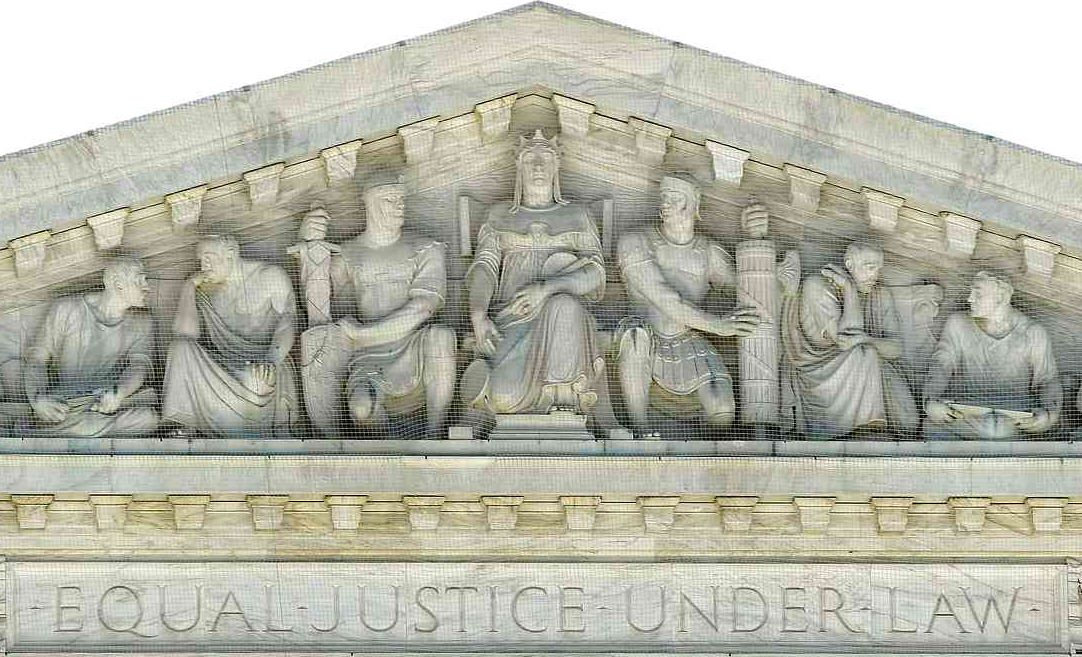
As you know, the Supreme Court has rejected Trump’s Executive Order seeking to end birthright citizenship. This is the good news. The bad news is that the decision was basically 5-1-3, or more accurately, from the standpoint of the basic constitutional principle, 5-4 — a much closer decision than it should have been. Thomas, Gorsuch and Alito voted to uphold the Executive Order and Kavanaugh rejected it only on statutory grounds rather than on grounds of the 14th Amendment. Still, the Court has by that slim majority upheld the constitutional guarantees of the 14th Amendment in its clearest and most obvious interpretation, and for that I am thankful.
The weaknesses of the dissent were readily pointed out by Justice John Roberts in the majority opinion and in the concurring opinion written by Justice Ketanji Brown Jackson (https://www.supremecourt.gov/opinions/25pdf/25-365_4hdj.pdf). Virtually every SCOTUS expert I have seen agrees that the dissent opinions were weak, even incoherent, and clearly ran against a century-and-a-half of legal precedent, as well as centuries of common law understanding (as Roberts and Jackson point out). It is abundantly clear what the 14th Amendment means, and it was clear at the time of its writing and ratification.
I’d like to address two things here: (1) a way in which the difference between the majority and the dissenters maps onto the difference between the revolutionary and counterrevolutionary traditions that I posted about yesterday, and (2) the Right’s strategy of generating a bogeyman out of births of children to undocumented or unauthorized immigrants — the bogeyman underlying Trump’s order (and a bogeyman indirectly addressed by Jackson in her concurring opinion).
(1) Citizenship and the Declaration
Here is the relevant clause of the 14th Amendment:
All persons born or naturalized in the United States, and subject to the jurisdiction thereof, are citizens of the United States and of the state wherein they reside.
The primary issue between the majority and the dissent (and hence the Government) hinges on the interpretation of the phrase “subject to the jurisdiction thereof.” The dissenters want us to believe that the phrase is dependent on domicile — i.e., being born in the United States is not enough, a person must have a permanent home in the United States. This is how allegiance is to be measured. Roberts and Jackson both point out how scant the evidence is for such an interpretation. The language is plain and has long been understood: if you are born within American borders, you are an American citizen, regardless of the circumstances of your birth. The Amendment constitutes a reaffirmation and extension of the Declaration’s promise of equality and unalienable rights.
Court scholar Morgan Marietta summarizes the issue this way:
In . . . Roberts’ . . . view, the Declaration of Independence established not only the importance of individual rights, but also the equality of all in holding those rights. Citizenship must be equal and open, defined as broadly as the Constitution allows, rather than narrow in its scope.
When the 14th Amendment expanded citizenship after the Civil War, it did so with universal language, addressing race but also something broader: “All persons born or naturalized in the United States, and subject to the jurisdiction thereof, are citizens of the United States and of the State wherein they reside.”
In the majority’s view, this must be read broadly to achieve the declaration’s insistence on rights and equality.
The dissenters believe that the declaration did something else: It established a new sovereign people who control their own definition of citizenship [emphasis added]. In this view, the Declaration of Independence established a distinct kind of equality — an equal share in control over the government through political representation and elections.
The phrase that I have italicized in this quote expresses the vision that I see linked to the forces of counterrevolution I posted about. As Marietta goes on to write, in this vision “current citizens must agree to offer an equal share in governance to any new members of society.” And, we can conclude, if such a people must “agree to offer” citizenship, they can also agree to reject, to exclude, to evict. This is the spirit behind Trump’s Executive Order, behind J.D. Vance’s rants about our being bound together not by principles but by ancestry, behind Justice Thomas’s perverse dissenting opinion arguing that the Amendment had in mind only freed African Americans who either had earned citizenship by fighting on the battlefield or who should be given it out of the goodness of our hearts because, having been enslaved, they had nowhere else to go.
On this view, America has not only been de facto an exclusionary nation — it was de jure so, designed to be so. That is a very counterrevolutionary notion.
(2) The bogeyman of unauthorized immigrant births
There was immediate panic in MAGA-world in reaction to the Court’s decision, and a pledge by a number of Republican lawmakers to address the matter, presumably following the guidelines for legislative action that Kavanaugh set out in his opinion. (As long as we have a 5-vote majority, any such legislative action would appear doomed; gods help us if we lose one of those votes and Trump makes another appointment.)
The picture painted by the Right is one of immigrants — mostly from “shithole countries” — flooding across the borders, aided and abetted by liberals and Democrats, for the sole purpose of giving birth to children whom we then can’t turn away. In its more virulent forms this is Great Replacement Theory — the idea that there is a war aiming to replace white Christian Americans (i.e., “real Americans”) with people of color, Jews, Muslims — geez, Klingons, for all I know.
Now, I do not deny that our immigration policies require reform; the nature of that reform will be for another day. (I will note that Trump has scuttled bipartisan efforts to enact reasonable reform, including as a candidate in order to keep the issue alive before the 2024 election.) But on this issue of immigrants giving birth, let’s look at some realities.
First, there is the particular bogeyman of “birth tourism” — i.e., the idea that a pregnant woman arranges to come here specifically to give birth and have her baby become a citizen. The Right’s mythology outlined above relies on a vague sense that this is widespread. It is a real phenomenon but, although difficult to estimate, clearly small. The Pew Research Center estimated that there were 9,000 such cases in 2023 — that is 0.25% of the total number of births in the country that year. And as the Pew study points out, most of those births were to women who entered the country on legal visas. Moreover, previous administrations (including Trump 1.0) addressed the problem through investigations of visa fraud, prosecution of so-called “birth hotels,” and similar law enforcement means, rather than through attacks on birthright citizenship.
Second, and more significantly, there is the matter of births where the parents are unauthorized. The numbers here are much larger. Pew estimates that in 2023, about 300,000 babies were born to mothers who were unauthorized and another 20,000 to women who had temporary legal status — so 320,000. That’s about 9% of the total number of births in that year: clearly significant, but hardly enough to justify the virulent, racist reaction of MAGA and the effort to remove a constitutional right. It’s worth noting that in 55,000 cases, the father of the child was a US citizen or green-card holder. And, this number has fluctuated, peaking in 2006:

Pew points out that some unknown number of these children have left the country. Morever, and this is important, assuming that unauthorized immigrants giving birth are representative of the overall unauthorized immigrant population, 80% have lived or will live in the country for at least five years, and 45% have lived or will live here for 20 years or more. These are people, in other words, who are embedded in American life — a situation that actually, if you think about it, comes close to what the 14th-Amendment revisionists mean by “domicile.” (Data from the Migration Policy Institute)
The upshot is this: we live in a nation that, as Lincoln said, “is dedicated to the proposition that all men are created equal.” Citizenship in the capacious understanding of the 14th Amendment, now upheld by a slim majority, is the embodiment of that dedication. We’ve dodged a bullet — let’s continue to be vigilant against the bogeymen of the counterrevolutionaries.

