Revolution and Counterrevolution

We are, of course, about to commemorate the 250th anniversary of the Declaration of Independence and the Revolution of 1776. I say “commemorate” rather than “celebrate” because it is not clear what sort of celebration could be called for at this moment of American authoritarianism and reaction. Many commentators are discussing this fact, and some, like Robert Reich, will be wearing black armbands to mourn the assault on our long effort to achieve our fundamental ideals.

To be sure, there are signs of hope: Trump’s popularity ratings are abysmal, and the Democratic primaries in New York and Colorado indicate that the sleeping giant of American progressivism is waking and that a long-overdue generational turnover is afoot. The latter particularly is something to celebrate.

And it needs to be said that, while our current moment is truly unprecedented in many ways, it is not the first time that the forces of democratic progress have had to marshal themselves in the face of stasis, complacency, oligarchy, and reaction. American history is a history of revolution and counterrevolution, and the nation has stood on the edge of the abyss more than once — and at least once fallen off and had to claw its way back up.

Jamelle Bouie’s column today, “Five Words That Changed the World,” argues effectively that Jefferson’s stirring words in the Declaration — “We hold these truths to be self-evident, that all men are created equal, that they are endowed by their Creator with certain unalienable Rights, that among these are Life, Liberty and the pursuit of Happiness” — were not as revolutionary, as radical, as history has made them. Jefferson and the elite members of the Continental Congress, Bouie says, saw them primarily as a justification for rebellion, for change of government, “not a road map for emancipation.” There was nothing particularly inclusive about them. Nevertheless, there were those who were determined to read these words as what Dr. Martin Luther King, Jr. would much later call “a promissory note.” Bouie writes:

But then there were those outside the circle of belonging: women, Natives, landless laborers and, most starkly, Black Americans, both free and enslaved. They did not read — or, most likely, hear — the Declaration as an abstract claim about a prelapsarian past. They understood it as a radical statement of principle for the present. And they wielded this principle against a society that would not extend the Revolutionary promise of freedom and self-government to those held in bondage.

It is to the excluded, the outsiders, that we owe the re-crafting of the Declaration into a tool for the advancement of its own stated democratic ideals.  (I recommend this review article by David Waldstreicher in Boston Review for some related reflections.)

After the Revolutionary War, the Declaration was in many ways forgotten or downplayed in the halls of power in favor of a focus on the Constitution — and the series of compromises around that document’s greatest flaw, the establishment of slavery. But the revolutionary voices were there — in slaves’ petitions and uprisings, in Abolitionists’ actions, even in the inspirations that others around the world found in those very words about equality and liberty that America’s Establishment seemed afraid to recognize. 

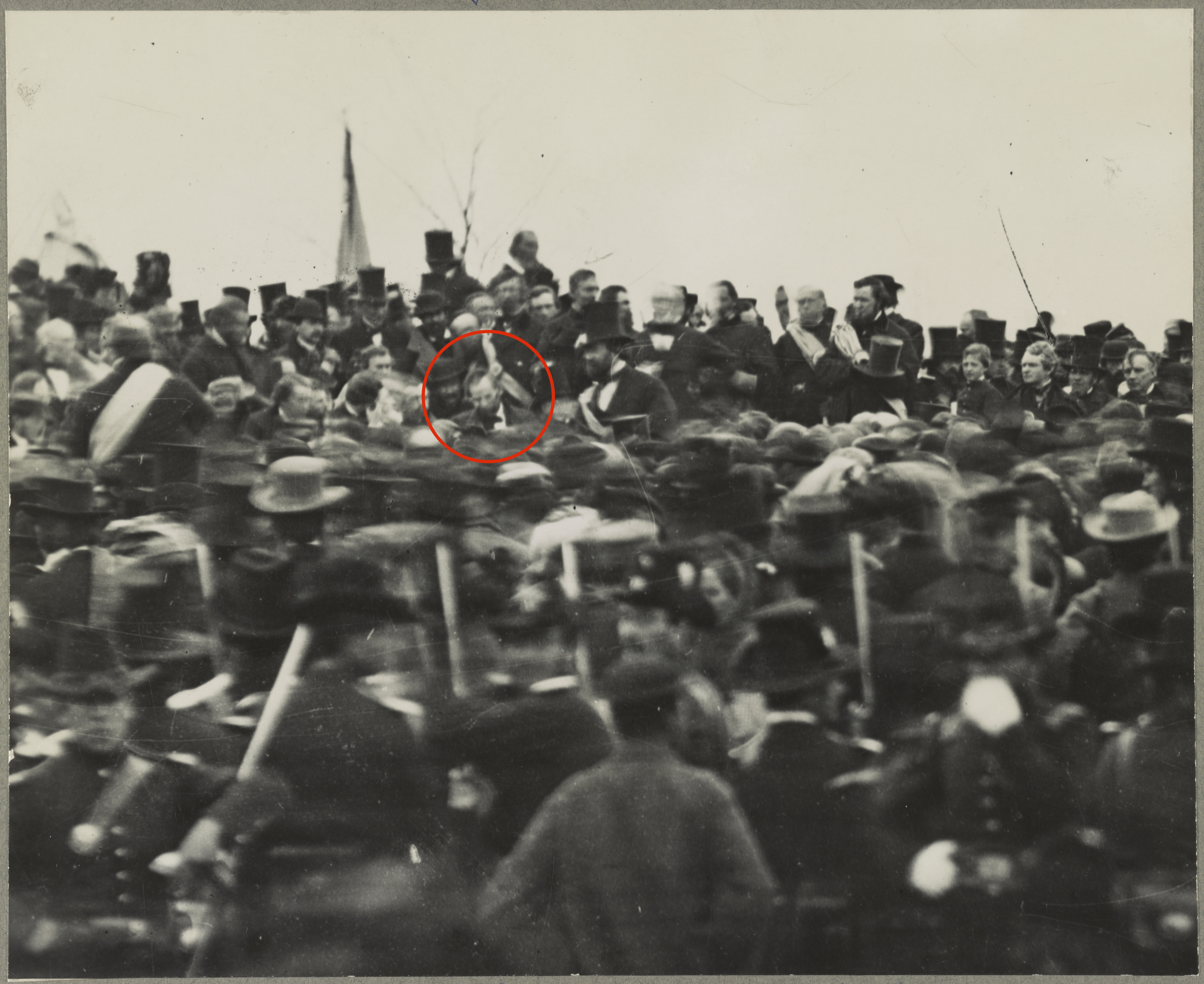
Finally, in the Civil War and Reconstruction, this revolutionary understanding of the Declaration was elevated and “enshrined,” as Bouie says, first by Lincoln in the Gettysburg Address, then by the Second Revolution of the 13th, 14th, and 15th Amendments, and further by the policies of Reconstruction.

But counterrevolution remained. The KKK was founded in 1865 and has had resurgences to the present. With the death of Reconstruction at the hands of yet another ameliorating political compromise, numerous post-war democratic gains were wiped out and Jim Crow took sway in the South. In some ways, the Civil War has never ended, though for much of the 20th century it was waged on rhetorical grounds, such as the elevation of the “Lost Cause” mythology about the war, which changed an anti-humanity rebellion into a a quaint nostalgia for the supposed rural, anti-technological values of the antebellum era. Never mind that the cotton gin had transformed plantations into vast factories with human beings as the cogs in the machine.

Fortunately, revolution continued also: the emergence of the labor movement, the development of late-19th-century progressivism, women’s suffrage, the economic democracy of the New Deal, the Civil Rights Movement, and so on. All accomplished by the courage and hard work of the excluded — and their allies — in the face of stasis, complacency and worse.

And now we face the present Reaction. Perhaps never before have the Counterrevolutionaries exercised such power and worked so diligently to reverse the gains of revolution.

In commemoration of the Declaration, then, let’s remember that while the words were set to paper by Jefferson and his committee, their best meaning lies in our efforts to hear and see those who are excluded, to listen to their demands, and to champion their cause of true equality and liberty for all.

The hard work has to be ours.

Posted in Uncategorized | Tagged , , , , , , , , , , | 1 Comment

Trump’s Religious Liberty Commission takes aim at church-state separation

Surely this is a defining principle of our democracy … religious freedom and the strict separation of state and religion are fundamental components of our freedom as equal human beings. How dare these mullahs of Christian nationalism seek to impose their religious beliefs on our free citizenry! How dare they! Outrageous!

Trump’s Religious Liberty Commission takes aim at church-state separation

https://www.washingtonpost.com/religion/2026/06/26/trumps-religious-liberty-commission-takes-aim-church-state-separation/

Posted in Uncategorized | Leave a comment

Trump may have damaged Reflecting Pool by having motorcade drive over it

After all the hysterical charges against “saboteurs” and rogue bicycle riders and 300-foot long sharp knives, a much more credible theory emerges on the ruined reflecting pool. You guessed it — Trump’s irresistible ego and his desire for a photo op driving a full (and heavy) motorcade of presidential vehicles through the drained and resurfaced pool in an “inspection tour”.

Trump May Have Damaged Reflecting Pool by Having Motorcade Drive Over

It

https://www.newsweek.com/donald-trump-motorcade-reflecting-pool-damage-washington-dc-12121337

Posted in Uncategorized | 1 Comment

The Prairieland Sentences Are a National Emergency

This is truly appalling … most of these persons were entirely peaceful protesters, not very different from the millions who have attended the No Kings demonstrations. One individual brought a firearm, unknown to most or all the others. The idea of a massive “Antifa” conspiracy is — as the article suggests by referring to show trials — a sickening Stalinist charade. We must hope that even larger “No Kings” demonstrations and pro-democracy demonstrations, always non-violent, will follow between now and November.

The Prairieland Sentences Are a National Emergency

https://newrepublic.com/article/212302/prairieland-verdicts-national-emergency/

Posted in Uncategorized | 2 Comments

Why men keep dropping out of the labor force: It starts in childhood, when kids see how males around them struggle, economists say

We discussed the growing disparities of life experience of men and women in our country at dinner tonight. Here is the article I mentioned about labor participation rates. There is an NBER research paper at the heart of it that I’ve downloaded — happy to share if you’re interested.

Why men keep dropping out of the labor force: It starts in childhood, when kids see how males around them struggle, economists say https://share.google/Mnh0N2pspOKLy8o8b

Posted in Uncategorized | 2 Comments

Health disparity researchers see a threat in new rules on NIH grants | STAT

More federal efforts to stifle honest research on the impact of hidden racial and ethnic barriers to well-being.

Health disparity researchers see a threat in new rules on NIH grants | STAT https://share.google/5n3SY8s085HDaXJkx

Posted in Uncategorized | Leave a comment

The Danger and the Opportunity

We are at a cusp in American history, a moment of crisis and opportunity. Trump is increasingly out of touch with reality, now alienating even parts of his base. But the Trump machine, the GOP machine, the Fox/Sinclair media machine keep rolling along — taking more and more desperate measures the more clear their unpopularity becomes. The GOP has long been the minority party, wielding power only because of systemic biases in their favor, which have permitted them not to adjust to democratic realities. The political world we live in is largely a construct of a GOP-media complex, going back to the Gingrich Congress or even to Reagan, and unwittingly abetted by Bill Clinton, who chose too often to play on the Republicans’ field.

Today, that world is close to having run its course. Trump is historically unpopular, and he shoots himself in the foot almost every day. But the machines churn on and are getting more aggressive:

  • The DOJ has charged 15 people in Minnesota with conspiring to impede ICE, when what they were doing was trying to help their neighbors. The charge of conspiracy is a dramatic overreach.
  • The DOJ has charged 8 Michiganders with conspiracy charges, effectively going after them as if they were mobsters or terrorists. While it is true that they committed crimes of vandalism and property destruction, the escalation of these charges to the level of national security is a repressive and essentially fascist tactic.
  • Trump and federal officials have baselessly alleged fraud in California’s primary elections.
  • The USPS has indicated that it could refuse to deliver mail-in ballots in states that do not comply with Trump’s illegal request for official lists of voters. Fortunately, there are many pre-emptive lawsuits filed against such action, which would clearly be illegal, but the assault on voting rights is clear.

This is just a sampling of the desperate actions the MAGA federal government is undertaking, as it looks at potentially massive losses in November. 

Fortunately, we the people are not silent, and the opposition is mounting. If you have not seen the recent Rise Up, Sing Out! No Kings action, take a look here. It’s inspiring. 

And please consider taking the following actions:

  • Get involved with Voters Not Politicians to combat the SAVE act and similar state-level efforts to restrict voting based on the lie of “voter fraud.”
  • Support Marc Elias’s Democracy Docket: Elias is an attorney with a remarkable record of winning against Trump’s election shenanigans in court. We need him to continue to win.
  • Donate to the legal support fund for the 15 Minnesotans charged with conspiracy.
  • Consider donating to the legal support fund for the Michigan students and associates charged with conspiracy. While some of their actions were clearly illegal, the DOJ is trying to use them to advance a repressive and racist agenda.
  • Support Inequality Media, which seeks to combat the domination of American media by oligarchs and monopolists.
  • Help with voter registration and election protection. Vote.org is a good place to start.
  • Get involved with the ACLU, which has been defending Americans’ rights for a century.
  • If you are an attorney or legal professional, get engaged with a professional association working to protect our democracy. Here are just a few: Brennan Center for Justice (also a fantastic source for the general public); Lawyers Committee for Civil RightsAmerican Immigration Lawyers CenterNational Immigration Law Center; ProBonoNAACP Legal Defense Fund.
  • Find out how you can help support immigrants in your community. In Michigan, where I’m located, good places to start are Michigan Advocacy Program and LSSCM. I’m sure virtually every state has equivalents.
  • And remember, we can all just pay attention to those around us, we can notice and attend and be kind. Aristotle said there are two virtues that make society thrive: justice and friendship. Let’s exercise both!

Democracy, equality, human dignity can and must prevail!

Posted in Uncategorized | Tagged , , , , , , , , | Leave a comment

A Follow-up on the Bloomsday Thought

I’ve been thinking more about Ulysses and Leopold Bloom’s comment about history. “History,” he says, “is no life for man and woman!” “History means violence and hatred — the opposite of love. Let’s see if we can unpack this a bit more.

A little background: Joyce composed Ulysses during WWI — the war of which his fellow Irish poet, W.B. Yeats, said “mere anarchy is loosed upon the world/ the blood-dimmed tide is loosed/ and everywhere the ceremony of innocence is drowned.” Surely, this was history at one of its low points. Joyce also composed Ulysses during his self-imposed exile from Ireland, which during his youth had already seen Troubles in the struggle for independence from Great Britain. And, in that exile, he feared for the health of his daughter and struggled in his relationship with Nora. Leopold Bloom is not Joyce, but one can see where frustration with “history” might come from and might shape a narrative. 

When Bloom contrasts history with love, with life, with the lives of “ordinary” people (and Ulysses is the account of one day in the lives of “ordinary” people) in part he is engaged in the modern project, the Enlightenment project, of elevating the dignity of the human individual. The struggles of nations, the march of empires — we might say today, the capturing of markets, the spectacles of so-called influencers — none of this can have worth without value that redounds to individual humans. But “history,” in the sense that Bloom uses it, inverts that relation. “Make America Great Again” inverts that relationship. In those inversions, the individual derives value from larger powers: the march of history, the nation, the Dear Leader.

And yet . . . and yet. There is another sense in which we cannot eschew, cannot avoid, history. Obviously, of course, things “happen” — and happening after happening is in some sense history. But history in a larger sense, in the sense of organizing lives and actions — the sense of history that Bloom is talking about — also needs, deserves our attention.

My question is this: if we are committed to democracy—a form of government that at least in principle is all about the dignity of individuals—can we eschew “history”?

Hegel thought that the march of history was the march of freedom. But the march does not happen on its own. And, if we are committed to human dignity and if the recognition and acceptance of human dignity for all is not yet accomplished, are we not then committed to history? Does not a commitment to democracy entail commitment to history, for as long as democracy is not complete

As Lincoln understood, the Declaration charges us. In the Gettysburg Address, he calls on us to be dedicated to “the great task remaining before us”—ultimately, the task of “government of the people, by the people, for the people.” To engage in that great task is to engage history as a project.

And perhaps then the question becomes, “at what cost”? At the cost of the love that Bloom talks about? Maybe “history” is a necessary but dangerous companion. If “history” or even “democracy” causes us to lose our sense of humanity for the sake of some larger idol — well, then Bloom is right,

Posted in Uncategorized | Tagged , , , , , , | Leave a comment

A Bloomsday Thought

Happy Bloomsday! If you are among the uninitiated, that means that today, June 16, is the day on which James Joyce’s Ulysses is set in 1904, the day in which the book’s protagonists — Leopold Bloom, Stephen Dedalus, and Molly Bloom — make their way in Dublin. 

The novel is connected to Homer’s Odyssey, with Bloom as Odysseus, Stephen as his son Telemachus, Molly as his wife Penelope, and episodes linked thematically and in many symbolic ways to episodes in the Odyssey. All refracted through the lens of modernity, through the turmoils of one hundred years ago that are still not so different from our own. The book is a riot of language, of wordplay, of sensation, of human understanding and misunderstanding, of folly and wisdom. If you haven’t read it, I hope you will. 

What does this have to do with this blog? Well, potentially a lot, but there is a particular episode, often referred to as the “Cyclops” episode, that I’d like to reflect on. In this episode, Leopold Bloom wanders into a pub and becomes involved in a discussion about Irish politics, nationalism, religion, and identity. The episode is narrated by an anonymous witness in the pub. The dominant figure in the pub is a character known simply as “the Citizen,” a belligerent Irish nationalist. The Citizen is suspicious of foreigners, Jews, and anyone he regards as insufficiently Irish. Bloom, who is of Jewish ancestry, becomes the target of the Citizen’s insults and prejudices. Bloom pushes back, somewhat meekly but nonetheless courageously arguing for a more inclusive vision, culminating in this exchange with a lackey of the Citizen, Alf, when Bloom avers:

—But it’s no use, says he.  Force, hatred, history, all that.  That’s not life for men and women, insult and hatred.  And everybody knows that it’s the very opposite of that that is really life.

—What? says Alf.

—Love, says Bloom.  I mean the opposite of hatred. [12.1481-85]

The upshot is that the Citizen becomes so enraged by what Bloom is saying that he actually chases Bloom out of the pub, trying to inflict bodily harm (just as the Cyclops chases Odysseus and his crew away from his island). Nationalism trumps love.

I can’t help but think of this episode when I see the reporting on Trump’s UFC disgrace at the White House on Flag Day: the jingoism, all meant to prop up his fragile ego; the pretense of having US troops “salute” macho-forward fighters, as if that’s where patriotism could find meaning; and the immense graft and corruption behind the scenes. The Citizen sits idly in his pub, holding forth before a crowd of drunkards, risking nothing as he spouts vicious nationalistic hatreds of the other. Trump sits idly at the White House, staging a spectacle before a crowd of sycophants, risking nothing as he spouts his own vile hatreds.

Bloom wants a way out of what he calls “history” — but that is certainly not available to us now. We are in a fight for our lives and for the life of our democracy; we are immersed in history. Let’s have the courage of Bloom to resist, and the sense that what we are striving for is the opposite of force, hatred, insult, and yes, even history.

Posted in Uncategorized | Tagged , , , , , , , , , | Leave a comment

The Shell Game About Social Security “Insolvency”

Robert Reich on his Substack has an excellent, brief piece on Social Security, which as usual is again under assault by Republicans, who are arguing that to make the program solvent, benefits must be cut and the age of eligibility raised. The argument is based on, among other things, the idea that the fund’s shortfall is due to baby boomers reaching retirement age and life expectancy increasing. Sounds right at a glance, but Reich, who used to be a Social Security trustee, debunks the myth.

Reich points out that the Greenspan Commission, whose work led to significant reforms in the 1980s, factored into their projections the baby boom bump, and he also notes that increasing life expectancy is not as widespread as many people think and definitely skews toward higher socioeconomic standing.

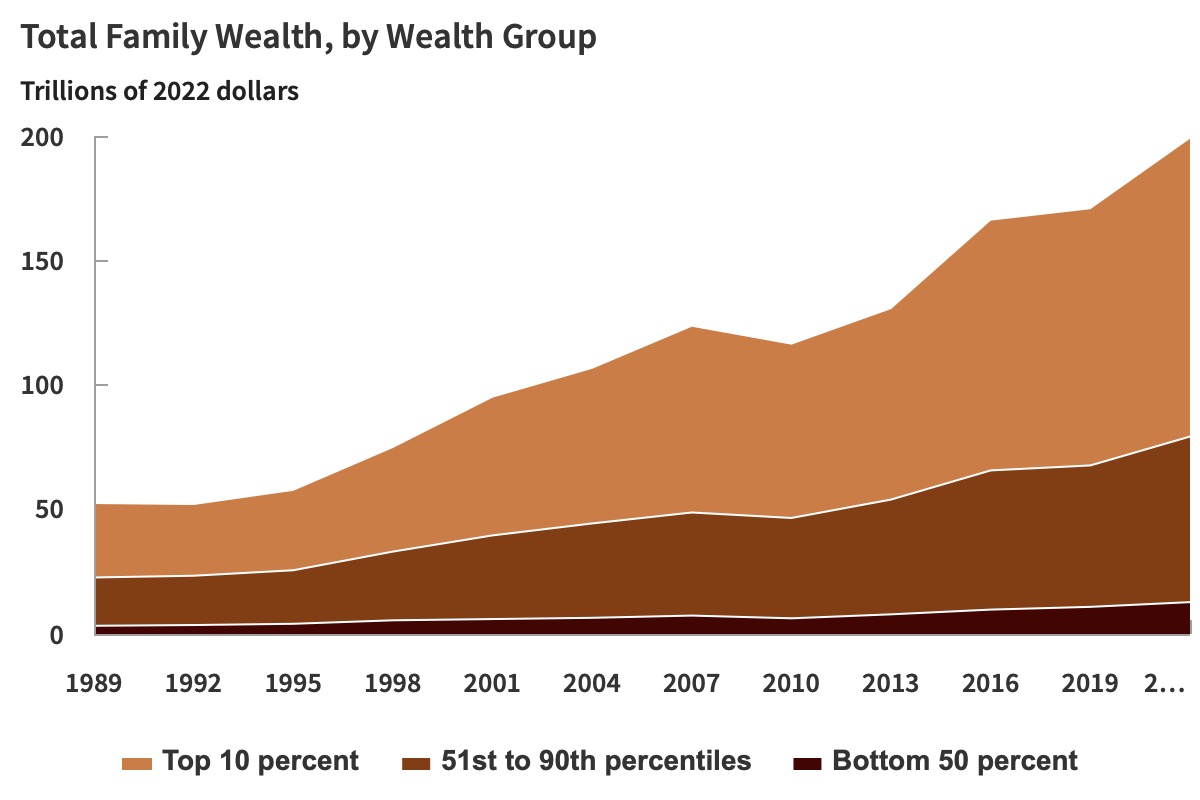
So what’s the real cause of the Social Security shortfall? What did Greenspan’s commission fail to predict? Widening inequality.

The Social Security payroll tax is capped at earning of $184,500. That figure is tagged to a target set by the Greenspan Commission: 90% of total income. But, due to rising inequality, the cap is now at only 83% of total income.

It went from 90 percent to 83 percent because a steadily larger portion of the nation’s total income has gone to the top. In 1983, the richest 1 percent of Americans got 11.6 percent of total income. Today, the top 1 percent takes in more than 20 percent.

There are several proposals with how to deal with this situation, which Reich discusses. It’s well worth a read.

And don’t buy the Right’s continuous efforts to redirect attention away from the effect that the oligarchs are having on us all.

Posted in Uncategorized | Tagged , , , | 1 Comment